Posted on: September 28, 2025
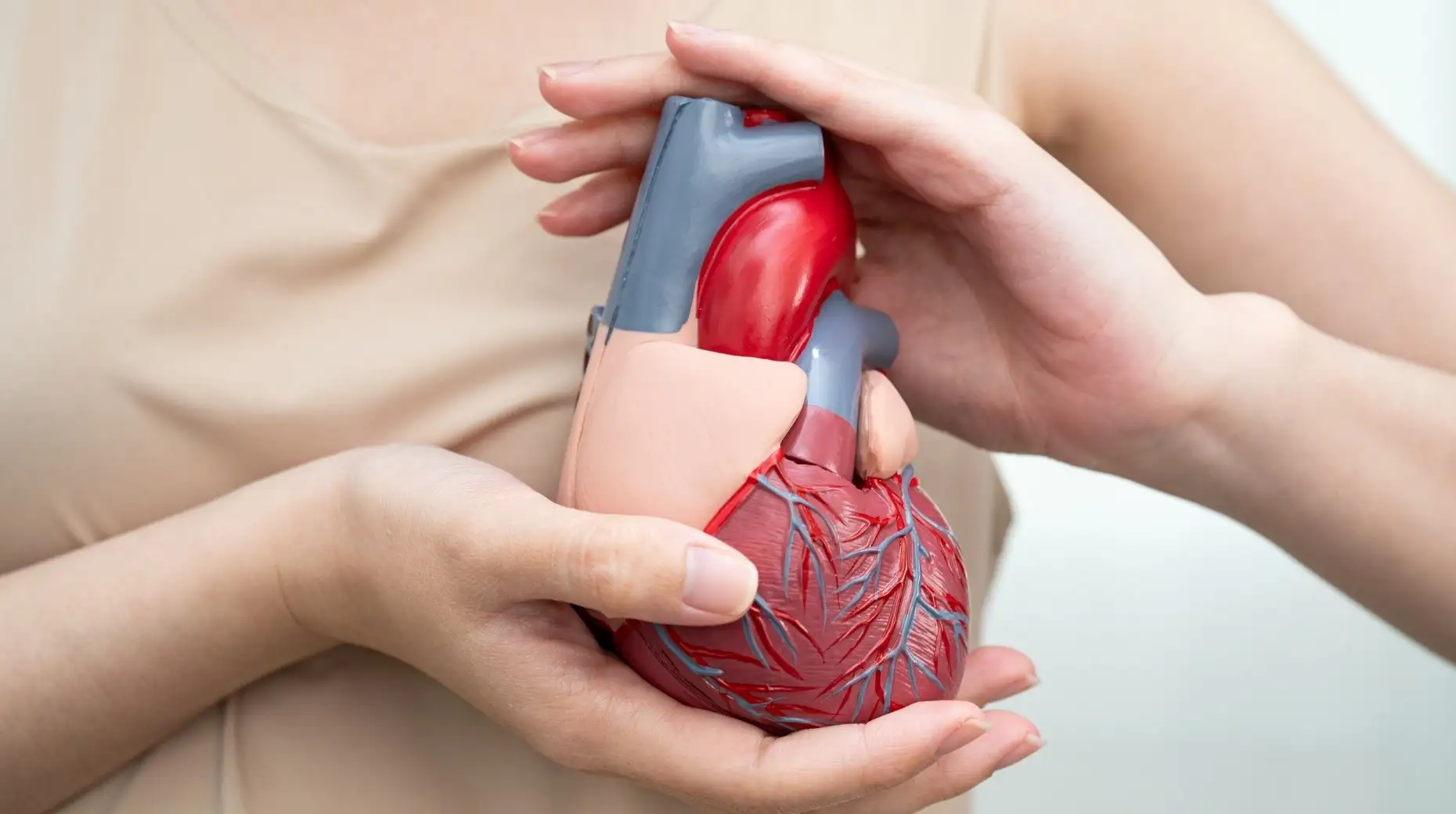
When most people think of heart disease, they picture it as a “man’s disease.” The reality? Cardiovascular disease (CVD) is the leading cause of death in women worldwide — and in Canada, it accounts for 40% of all women’s deaths when heart disease and stroke are combined【Heart & Stroke, 2023】. That’s nearly half of us.
Every 7 minutes, a Canadian woman is diagnosed with heart disease. Every 20 minutes, a Canadian woman suffers a heart attack【Ottawa Heart Institute, 2023】. More women die of heart disease than of breast cancer — by a wide margin.
So why aren’t we talking about this more?
Menopause and the Arteries: What Estrogen Used to Do
Estrogen is more than just a reproductive hormone. It plays a crucial role in vascular health:
-
It supports nitric-oxide–mediated vasodilation, keeping arteries flexible and responsive【Mendelsohn & Karas, 1999】.
-
It reduces oxidative stress and inflammation in the endothelium (the artery’s inner lining)【Moreau & Hildreth, 2014】.
When estrogen declines in menopause, studies consistently show:
-
Worsened endothelial function (the ability of arteries to dilate)
-
Increased arterial stiffness and carotid changes compared to premenopausal women【Moreau & Hildreth, 2014】【Zaydun et al., 2006】
This shift helps explain why women’s CVD risk accelerates in midlife.
Were Women Left Out of Heart Research?
Yes — and this matters.
Until the 1993 NIH Revitalization Act, clinical trials often excluded women or did not analyze outcomes by sex【Epstein, 2004】. Even into the 2000s, women remained underrepresented in CVD research, despite carrying equal or greater disease burden【Heiat et al., 2002】.
This has had real consequences:
-
We know less about women’s symptom patterns (which can differ from men’s).
-
We have less data on how women respond to drugs, devices, and interventions.
-
Women’s care has often lagged behind.
Hormone Therapy (HT/MHT) and Cardiovascular Disease: What the Evidence Says
Hormone therapy is not recommended as a universal prevention strategy for heart disease. Most evidence, particularly from oral estrogen, shows no cardiovascular protection and an increased risk of stroke and clotting【Boardman et al., 2015, Cochrane Review, PMID: 25754617】. However, transdermal estrogen does not appear to raise clotting risk【Canonico et al., 2008, BMJ, PMID: 18495631】, and emerging research suggests it may even reduce cardiovascular risk in certain women【Hodis & Mack, 2011, PMID: 20601871】. This remains an evolving and nuanced area — stay tuned as the evidence continues to develop.
What You Can Do: Lifestyle is Medicine
The most powerful tools for women’s cardiovascular health are evidence-based lifestyle changes, and this is where naturopathic medicine shines.
Exercise
-
A systematic review shows that aerobic and resistance exercise improves arterial stiffness and blood pressure in postmenopausal women【Ashor et al., 2014】.
-
Even 2,500 extra steps per day over time can significantly reduce liver fat and cardiometabolic risk【Zhou et al., 2023】.
Nutrition
-
Mediterranean-style diets, high in fiber, antioxidants, and omega-3s, are consistently linked to lower CVD risk in women【Solfrizzi et al., 2015】.
-
Psyllium fiber (>16 g/day) can lower LDL cholesterol and improve lipid profiles【Brown et al., 1999】.
Supplements (targeted, evidence-based)
-
Omega-3 fatty acids: Meta-analyses support their role in reducing triglycerides and cardiovascular inflammation【Bernasconi et al., 2020】.
-
Curcumin: May reduce systemic inflammation and improve endothelial function【Panahi et al., 2016】.
-
N-acetylcysteine (NAC): Provides antioxidant support, helpful in reducing oxidative stress【Samuni et al., 2013】.
Stress and Sleep
-
Chronic stress and poor sleep both increase cardiovascular risk; mind-body interventions (yoga, meditation, acupuncture) can help regulate cortisol and autonomic balance【Pascoe et al., 2017】.
The Bottom Line
-
CVD is the leading cause of death for women.
-
Menopause accelerates risk due to the loss of estrogen’s vascular protection.
-
Women were historically underrepresented in research, but that’s changing.
-
Hormone therapy is not a universal prevention tool; its role depends on route, timing, and individual risk.
-
Lifestyle is foundational: movement, nutrition, stress management, and targeted supplementation are powerful tools for protecting women’s hearts.
As naturopathic doctors, we work with women to design personalized, evidence-informed plans that integrate these approaches. Prevention isn’t one-size-fits-all — it’s about understanding your risks, your goals, and your physiology.
References
-
Heart and Stroke Foundation of Canada. Women and Heart Disease. heartandstroke.ca
-
Ottawa Heart Institute. Canadian Women’s Heart Health Centre. ottawaheart.ca
-
Mendelsohn ME, Karas RH. The protective effects of estrogen on the cardiovascular system. N Engl J Med. 1999;340(23):1801–11. PMID: 10362825
-
Moreau KL, Hildreth KL. Estrogen and vascular aging: Implications for menopause. Am J Physiol Heart Circ Physiol. 2014;307(9):H1101–H1119. PMID: 25142651
-
Zaydun G, et al. Menopause is an independent factor augmenting the age-related increase in arterial stiffness. Hypertens Res. 2006;29(11):895–902. PMID: 16882679
-
Epstein FH. Gender differences in response to drugs: The need for inclusion of women in clinical trials. N Engl J Med. 2004; 329:93–95. PMID: 15134682
-
Heiat A, Gross CP, Krumholz HM. Representation of the elderly, women, and minorities in heart failure clinical trials. Arch Intern Med. 2002;162(15):1682–8. PMID: 12153370
-
Boardman HMP, et al. Hormone therapy for preventing cardiovascular disease in post-menopausal women. Cochrane Database Syst Rev. 2015;(3):CD002229. PMID: 25754617
-
Canonico M, et al. Estrogen and risk of venous thromboembolism: a meta-analysis. BMJ. 2008;336(7655):1227–1231. PMID: 18495631
-
Hodis HN, Mack WJ. A “window of opportunity:” The reduction of coronary heart disease and total mortality with menopausal therapies is age- and time-dependent. Brain Res. 2011;1379:244–252. PMID: 20601871
-
Ashor AW, et al. Effects of exercise on arterial stiffness and wave reflection: Systematic review and meta-analysis. J Am Heart Assoc. 2014;3(6):e000682. PMID: 25387779
-
Zhou Z, et al. Physical activity and metabolic dysfunction-associated steatotic liver disease: A 5-year cohort study. Hepatology. 2023;78(3):656–666. PMID: 37939784
-
Solfrizzi V, et al. Mediterranean diet and age-related cognitive decline: A systematic review. J Nutr Health Aging. 2015;19(5):489–96. PMID: 26746745
-
Brown L, et al. Cholesterol-lowering effects of dietary fiber: A meta-analysis. Am J Clin Nutr. 1999;69(1):30–42. PMID: 10484567
-
Bernasconi AA, et al. Omega-3 polyunsaturated fatty acids and cardiovascular health: An umbrella meta-analysis. Eur J Prev Cardiol. 2020;27(6):593–603. PMID: 31736329
-
Panahi Y, et al. Curcuminoids modify lipid profile in type 2 diabetes: A randomized controlled trial. Complement Ther Med. 2017;33:1–5. PMID: 27959367
-
Samuni Y, et al. The chemistry and biological activities of N-acetylcysteine. Biochim Biophys Acta. 2013;1830(8):4117–4129. PMID: 31163052
-
Pascoe MC, et al. Yoga, mindfulness-based stress reduction and stress-related physiological measures: A meta-analysis. Psychoneuroendocrinology. 2017;86:152–168. PMID: 27682237
Disclaimer: This blog is intended for educational and informational purposes only and should not be considered medical advice. Always consult your healthcare provider before making decisions about your health, treatment, or wellness plan.